Muay Thai basics
Muay Thai culture and wai khru: what the pre-class ritual means
Wai khru, ram muay, and wrapping are not a show. They mark teacher lineage and respect before a Bangkok beginner class.
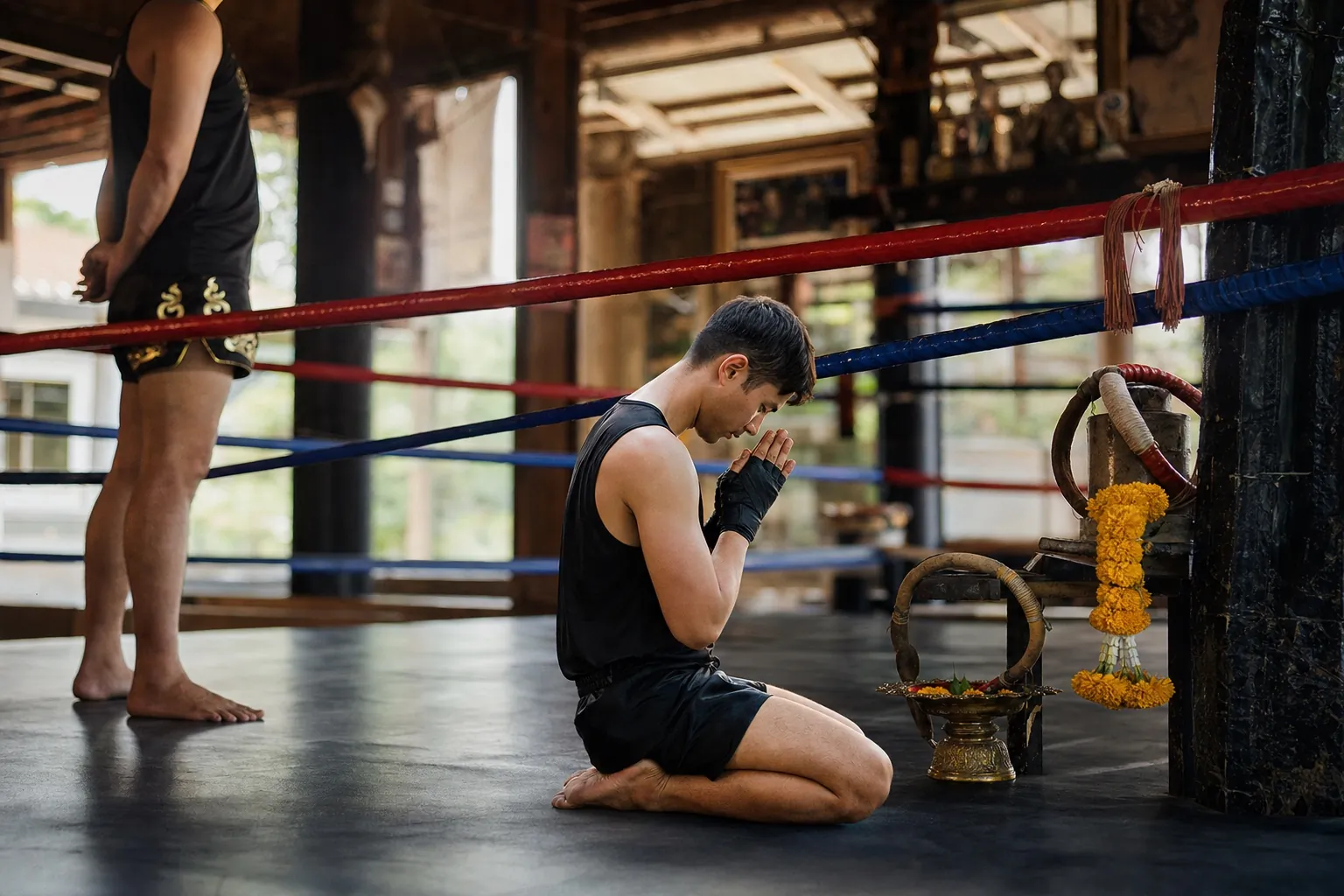
Muay Thai culture sits next to Buddhist practice, teacher lineage, and community identity. Students wai the coach before class. Fighters dance ram muay before a formal bout. Those are the same culture, not extras for photos.
Key takeaways
- Muay Thai is tied to Buddhism, teacher lineage, and community, not only competition.
- Wai khru is the pre-class or pre-fight greeting to the teacher and earlier teachers.
- Wrapping protects the wrist and also marks the shift into fighter focus.
- Travelers: wai on arrival, follow the ritual, and do not clown on the ring or teacher photos.
- Attitude matters more than perfect form. Wai again after class.
Wai khru is not staged for travelers. It is the first motion into a teacher-lineage culture.
— Notes from verified Bangkok coaches
1. Muay Thai is not only fighting
A verified beginner class in Bangkok usually includes a short wai khru or greeting. You do not need a chant. Knowing what it honors helps you enter the room instead of watching from outside it.
2. What wai khru is
Wai khru (ไหว้ครู) means “pay respect to the teacher.” Before training or a fight, a student uses a wai, a bow, or a fixed sequence to thank the present teacher and earlier teachers. Thai dance and massage keep a related greeting.
In a gym, wai khru may last 30 seconds: face the coach, greet the corners of the ring, and breathe. Fight-night ram muay is longer. Each camp has its own motion, like a signature of lineage.
3. Why wrapping matters
A coach wrapping your hands is not only injury prevention. In older camps it also marks the shift into fighter focus. Some still wrap with a chant or a quiet pause. Modern gyms often reduce it to breath and a glove check.
A First Punch beginner class teaches a basic wrap: protect the wrist and knuckles so pad power travels cleanly. Ask about the camp’s wrapping habit if you care about the older form. Most English-friendly Bangkok coaches will explain it in a minute.
4. Traveler etiquette
For a Bangkok class, these points are enough:
- Remove shoes if the gym asks, then wai the coach
- Follow wai khru before class; attitude beats perfect form
- Do not clown on the ring, ropes, or teacher photos
- Wai again after class. If the coach praises you, wai back
5. From culture to a booking
Once you know wai khru, the first class is more than calories. You step into a teacher-lineage culture for an hour. That is why next muaythai talks about using sport to experience Thailand — it lasts longer than a souvenir.
Ready? Match a verified gym in Quest Finder, or book a session.
Frequently asked questions
I do not speak Thai. How do I do wai khru?
Follow the coach’s wai and bow. You do not need a chant. Respect matters more than perfect movement.
Will a beginner class include a full ram muay?
Usually not. Verified beginner classes use a short greeting. Full ram muay is more common at a formal fight.
Why is joking on the ring a problem?
In a Thai gym the ring, ropes, and teacher photos carry ritual weight. Treating them as a joke reads as disrespect for the lineage.
Related reading
Muay Thai basics
Muay Thai history and origins: from battlefield craft to national sport
Where Muay Thai comes from: Siamese soldiers, Ayutthaya, and the modern Rajadamnern ring.
Beginner
What happens in your first Muay Thai class in Bangkok?
Walk through a first-time Muay Thai class in Bangkok: check-in, wraps, warm-up, pad work, and what a beginner session will not do.